About Nayakan
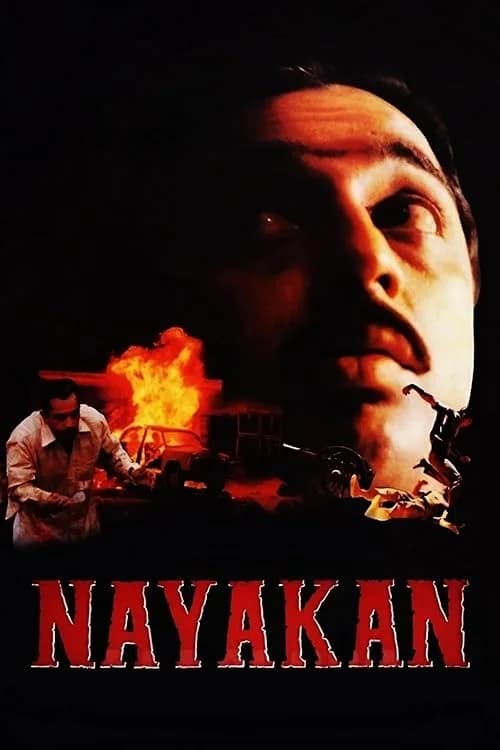
Nayakan (1987), directed by the visionary Mani Ratnam, stands as one of Indian cinema's most profound crime dramas. The film follows Velu Nayakan, a young boy from Tamil Nadu who witnesses police brutality against his family and flees to Mumbai. There, he gradually rises from a petty smuggler to a powerful underworld don, becoming both a feared crime lord and a beloved protector of the slum-dwelling poor. This complex duality forms the heart of the narrative, exploring themes of power, morality, and the cyclical nature of violence.
Kamal Haasan delivers a career-defining performance as Velu, masterfully portraying the character's evolution from innocent victim to ruthless kingpin and, ultimately, to a tragic figure burdened by his legacy. His nuanced acting captures every shade of the character's internal conflict. Mani Ratnam's direction is impeccable, blending gritty realism with moments of poetic beauty, while Ilaiyaraaja's haunting score elevates the emotional impact. The cinematography paints a vivid portrait of 1960s-80s Mumbai, from its sprawling slums to its shadowy underworld.
Viewers should watch Nayakan not just as a gangster film, but as a profound human drama and a landmark of Indian storytelling. It draws loose inspiration from real-life figures and the classic film 'The Godfather,' yet carves its own unique identity with deep cultural roots. The film's exploration of how systemic injustice breeds its own form of justice remains powerfully relevant. For anyone interested in world cinema, compelling character studies, or the golden age of Indian filmmaking, Nayakan is an essential and unforgettable viewing experience that transcends its genre.
Kamal Haasan delivers a career-defining performance as Velu, masterfully portraying the character's evolution from innocent victim to ruthless kingpin and, ultimately, to a tragic figure burdened by his legacy. His nuanced acting captures every shade of the character's internal conflict. Mani Ratnam's direction is impeccable, blending gritty realism with moments of poetic beauty, while Ilaiyaraaja's haunting score elevates the emotional impact. The cinematography paints a vivid portrait of 1960s-80s Mumbai, from its sprawling slums to its shadowy underworld.
Viewers should watch Nayakan not just as a gangster film, but as a profound human drama and a landmark of Indian storytelling. It draws loose inspiration from real-life figures and the classic film 'The Godfather,' yet carves its own unique identity with deep cultural roots. The film's exploration of how systemic injustice breeds its own form of justice remains powerfully relevant. For anyone interested in world cinema, compelling character studies, or the golden age of Indian filmmaking, Nayakan is an essential and unforgettable viewing experience that transcends its genre.